


Delivered to your inbox every Monday, Press Clips is a rundown of the previous week’s happenings in politics and technology in America. News, articles, opinion pieces, and more, to bring you up to speed for the week ahead.

Top Story
The White House’s AI and crypto czar David Sacks is lobbying against the measure, arguing it would undermine President Trump’s strategy of flooding the global market with U.S.-made microchips.
The amendment was introduced by Sen. Jim Banks (R-IN).
What is the GAIN Act?
The act requires U.S. chipmakers to prioritize domestic buyers before exporting advanced processors, particularly when supply is constrained.
It also:
Establishes a licensing regime for chips with performance above a 4,800 processing power threshold, barring exports if U.S. customers remain unserved.
Prohibits exports to adversarial states (China, Russia, Iran, North Korea) unless U.S. demand has been fully met, ensuring no backlog at home while constraining hostile access.
Shifts export controls from country-by-country discretion (AI Diffusion Rule) to a capability-based, America-first framework, potentially reshaping global semiconductor supply chains.
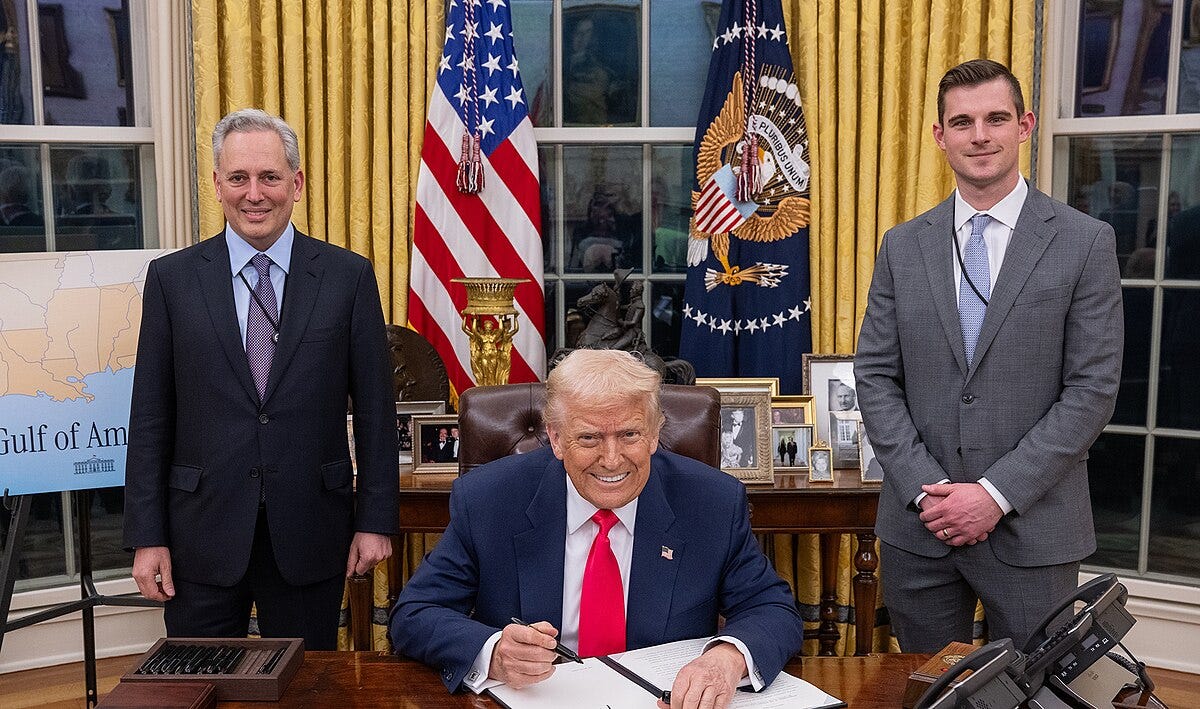
White House Crypto Czar David Sacks with President Trump (Source: Wikimedia Commons)
The act has been divisive:
Proponents frame the measure as an “America First” safeguard to prevent China and other adversaries from gaining access to cutting-edge AI hardware.
Supporters like Americans for Responsible Innovation (ARI) and American Compass argue that universities and startups face months-long backlogs for advanced chips and should not “wait at the back of the line.”
Critics, led by Nvidia and industry groups, contend the bill is unnecessary because U.S. customers already receive priority, and warn it would restrict global competition in chip markets.
Nvidia likened the bill to the rescinded Biden-era AI Diffusion Rule, which imposed caps on computing exports, calling both measures economically damaging and based on “doomer” fears.
However, the House NDAA draft does not contain parallel language, raising the likelihood the measure could be stripped during conference negotiations.

Policy
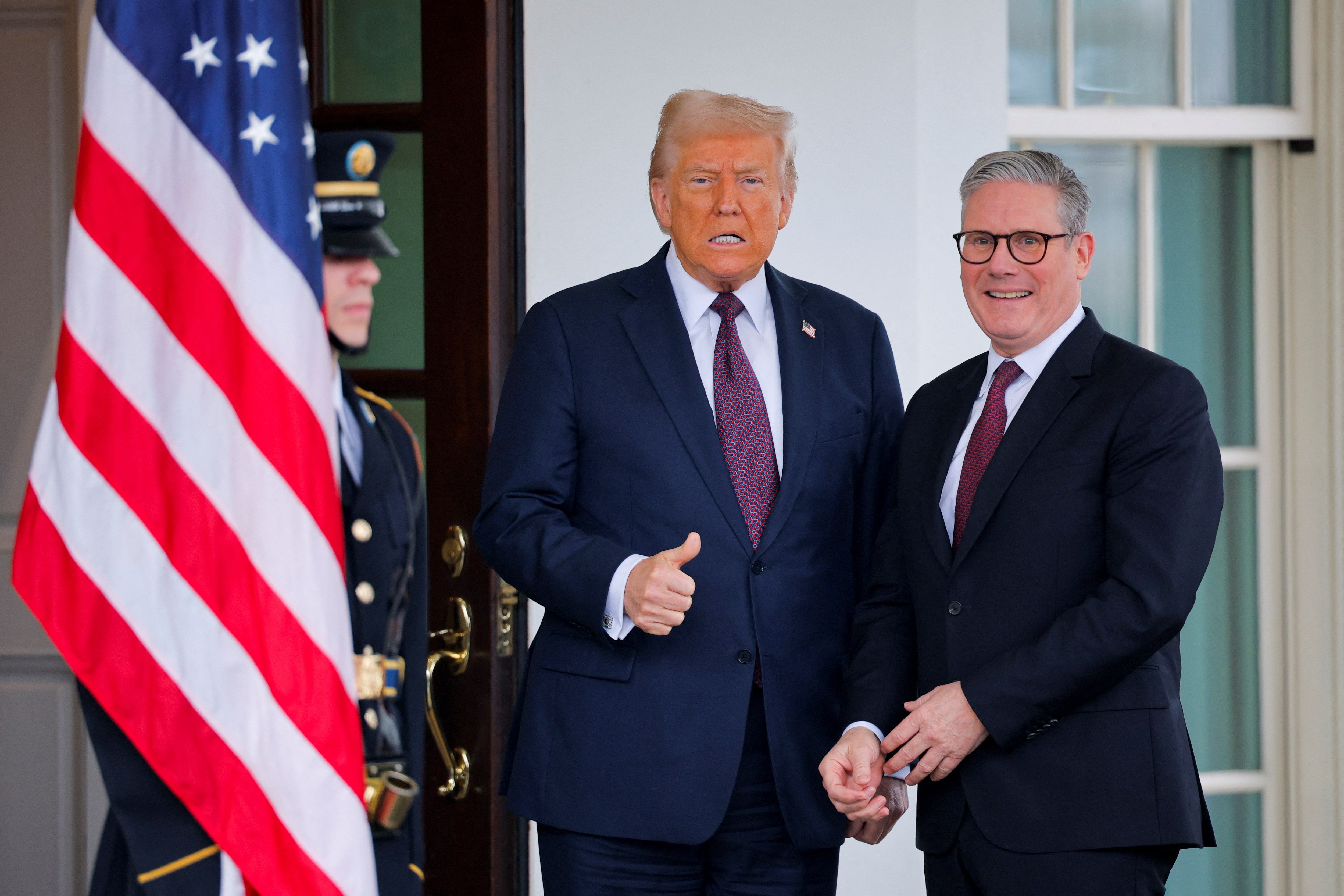
President Trump and UK Prime Minister Keir Starmer signed a landmark Technology Prosperity Deal to boost joint innovation in AI.
It connects the U.S. Center for AI Standards and Innovation with the UK AI Security Institute to coordinate standards, share talent, and improve oversight of advanced models.
California lawmakers approved a landmark AI bill that sets sweeping transparency and safety rules for advanced AI models, putting the measure on Gov. Gavin Newsom’s desk and making the state a national test case.
The legislation requires AI developers to disclose model capabilities, assess safety risks, and maintain detailed documentation, extending obligations beyond federal guidance,
If signed, the bill would establish California as the first state with a comprehensive AI regulatory framework, influencing national debates over federal preemption and tech governance.
The plan would require large AI companies to contribute to a new federal AI Horizon Fund to support workers, infrastructure, and responsible deployment, ensuring broad-based benefits from AI growth.
The full text is available online.
The FTC launched an inquiry into seven major companies operating AI companion chatbots, seeking details on how they test, monitor, and mitigate risks to children and teens from chatbots that mimic human relationships.
Companies under investigation include Alphabet, Meta, OpenAI, and xAI.
Press Clips
A Strategic Case for H20 Chip Exports (Anton Leicht) ✍
U.S. States and Cities Are Shaping the Future of AI Infrastructure (AI Policy Bulletin) ✍
What will AI look like in 2030? (EpochAI; AI Policy Perspectives) 📊
Looking ahead in AI: Takes on the future of AI (The AI Frontier) ✍
How I Approach AI Policy (Dean Ball) ✍
Is AI a bubble? (Exponential View) ✍
Nate Silver on AI, Politics, and Power (ChinaTalk) 🔉
xAI’s Colossus 2 – First Gigawatt Datacenter In The World (SemiAnalysis) ✍
Would democracy survive an AGI-supercharged economy? (Transformer News) ✍
Coding as the epicenter of AI progress and the path to general agents (Nathan Lambert) ✍