


Delivered to your inbox every Monday, Press Clips is a rundown of the previous week’s happenings in politics and technology in America. News, opinion, podcasts, and more, to bring you up to speed for the week ahead.

Policy
Trump Administration chip deal with Nvidia & AMD draws scrutiny from Democrats
The Trump administration has reinstated export licenses for Nvidia and AMD to sell certain AI chips to China, under a new arrangement requiring the firms to pay 15% of related revenue to the US government.
Sales of Nvidia’s H20 chip resumed on August 8 following negotiations between President Trump and Nvidia CEO Jensen Huang.
President Trump described the H20 as “obsolete” and confirmed the US would not approve exports of Nvidia’s more advanced Blackwell chips, though a reduced-performance version could be considered.
The deal has prompted sharp criticism from six Democratic senators—Mark Warner, Chuck Schumer, Jack Reed, Jeanne Shaheen, Chris Coons, and Elizabeth Warren—who called the arrangement “reckless” and potentially unconstitutional.
In an August 15 letter, they questioned its legal basis and argued it undermines US national security.
The White House has acknowledged the legal framework is still being reviewed by the Commerce Department.
Nvidia has defended the sales, stating that the H20 chip does not enhance military capabilities and that the deal supports US economic and strategic interests.

Anthropic offers Claude to US government for $1 under new GSA deal
Anthropic has signed a $1 licensing agreement with the US General Services Administration, allowing federal agencies—including legislative and judicial branches—to access its Claude AI models for one year.
The deal covers Claude Enterprise and Claude Government variants, both approved under the GSA’s OneGov acquisition strategy.
The deal includes onboarding support and simplifies procurement by allowing agencies to access Claude without negotiating separate contracts. Claude’s Government version is certified at the FedRAMP High level, meeting the highest standards for handling sensitive unclassified data.
The deal follows a similar offer by OpenAI, with both companies joining ChatGPT, Claude, and Gemini now available through the Multiple Award Schedule. GSA has also announced recent AI partnerships with AWS and Oracle.
Observers have noted that while these AI offerings are priced at $1 for now, the arrangements are temporary. Agencies relying on these tools may face higher costs when the promotional terms expire, raising questions about future procurement and vendor lock-in.
Following these offers from OpenAI and Anthropic, GSA is exploring ways to expedite security reviews for AI tools across federal agencies.
While FedRAMP clearance is a potentially significant barrier, GSA is now consulting with the Federal CIO Council to establish a prioritization pathway for AI vendors newly added to the government’s purchasing schedule.
In parallel, GSA is reportedly working with OpenAI on a temporary authorization-to-operate (ATO) process for ChatGPT Enterprise. This could allow some agencies to adopt the tool based on GSA’s internal review, pending full FedRAMP clearance.
The agency has signaled its preference for short initial terms while agencies build familiarity with generative AI.
Broader FedRAMP reforms are also underway, aimed at streamlining the approval process for emerging technologies.
Data center industry urges Treasury to preserve clean energy subsidy rules
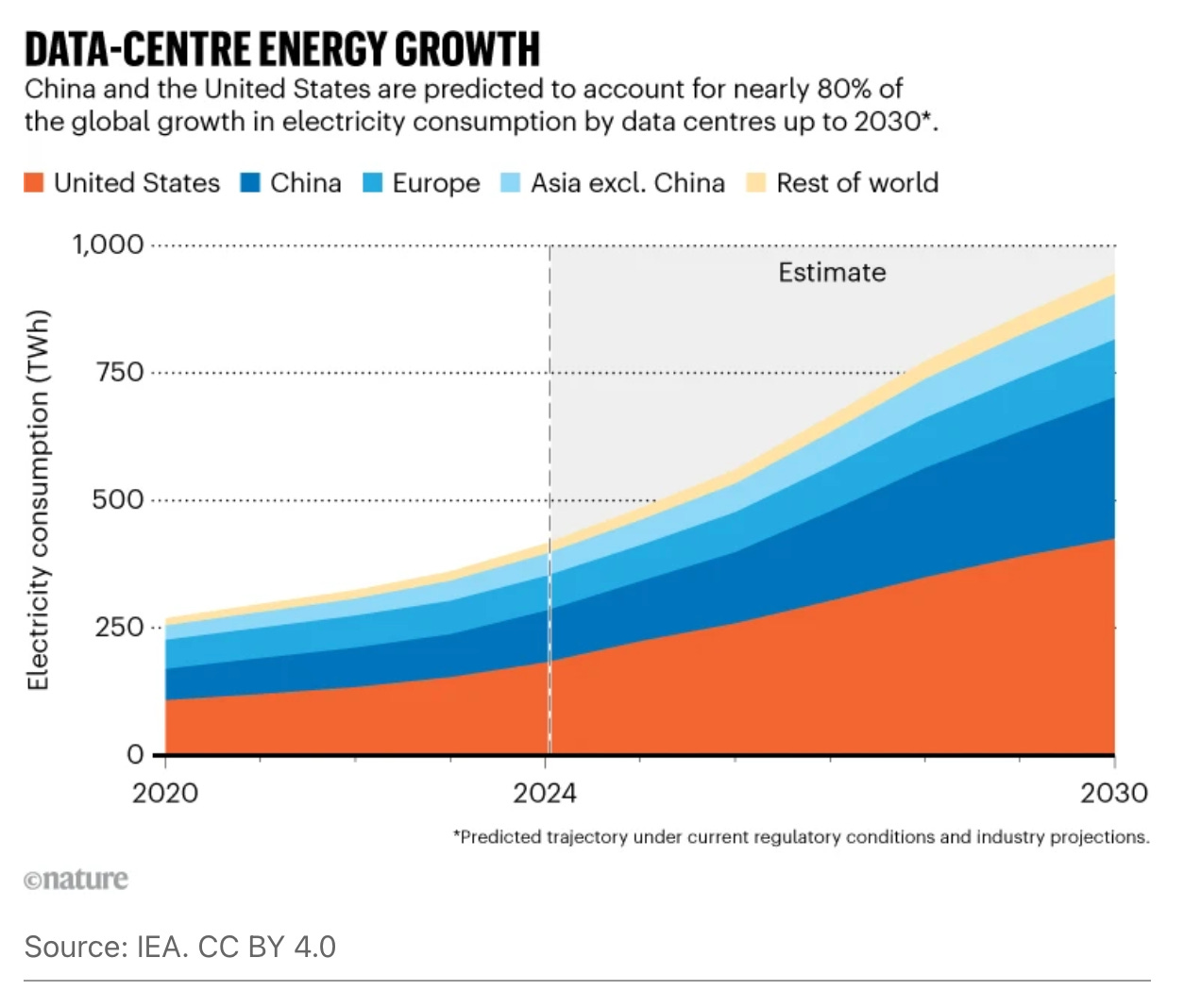
Google, Amazon, Microsoft and other data center operators have urged Treasury Secretary Scott Bessent to retain current clean energy subsidy rules, warning that stricter requirements could stall new energy projects at a time of rising electricity demand from AI infrastructure.
The letter, dated August 4 and organized by the Data Center Coalition, comes in response to a July executive order from President Trump directing the Treasury to tighten eligibility for wind and solar tax credits.
“Any regulatory friction that slows down deployment of new generation today directly impacts our ability to meet AI-era electricity demands tomorrow,” the coalition wrote.
Industry analysts estimate that up to 60 gigawatts of planned solar capacity could be lost by 2030 under the new rules.
The data center sector contributed $3.5 trillion to US GDP between 2017 and 2023, according to the coalition, and supports over 600,000 jobs.
The Treasury Department is expected to release final guidance by August 18.

Source: Nature (2025)
The National Science Foundation and NVIDIA are jointly investing over $150 million to support the development of open-source AI models for scientific research.
The project, led by the Allen Institute for AI (Ai2), will build multimodal models trained on scientific literature and data.
The initiative aligns with the Trump administration’s AI Action Plan, which prioritizes open-weight models and public-private collaboration. NSF is contributing $75 million; NVIDIA will provide $77 million.
NSF said the project aims to accelerate scientific discovery by making advanced AI tools freely available to researchers.
Press Clips
Transistor Radio: H20, GPT5, DUI Lawyers, Ajinomoto (ChinaTalk) 🔉
Meta’s Guide to Governance: Bulldoze, Lobby, Repeat (AI Governance, Ethics and Leadership) ✍
China is killing the US on energy. Does that mean they’ll win AGI? (Casey Handmer, Dwarkesh Podcast) 🔉
Out of Thin Air (Dean Ball, Hyperdimensional) ✍
AI & Jobs: Enter Populism? (Anton Leicht, Threading the Needle) ✍
Avoiding a data center electricity price apocalypse (Matthew Yglesias, Slow Boring) ✍
Episode 13: Reporting in Taiwan and China (Special Competitive Studies Project, Strait Forward Podcast) 🔉