


Delivered to your inbox every Monday, Press Clips is a rundown of the previous week’s happenings in politics and tech in America. News, opinion, podcasts, and more, to bring you up to speed for the week ahead.
TOP STORY
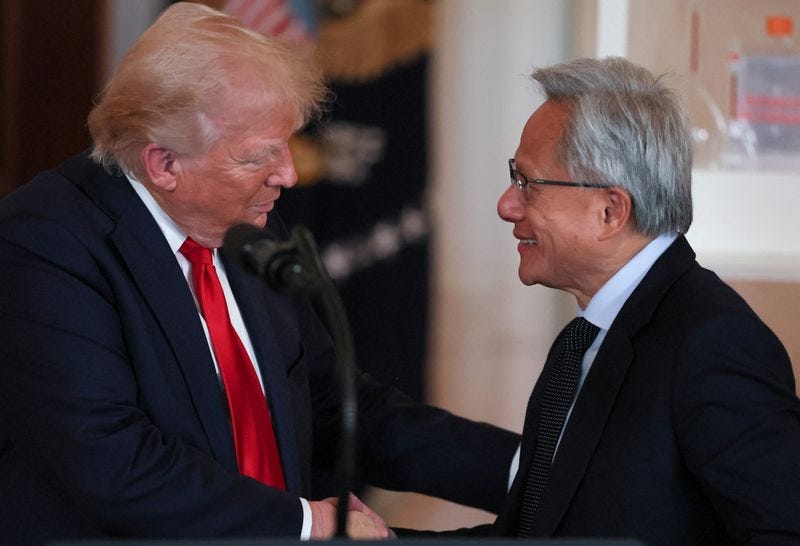
Trump has said that the U.S. will allow Nvidia to sell H200 chips to China, if it gets a 25% cut.
President Trump greenlit Nvidia’s export of its H200 AI chips to “approved” Chinese customers, reversing earlier restrictions.
Under the plan, 25% of all H200 China sales will be paid to the U.S. government, expanding on a previous 15% revenue-sharing framework.
Trump says Xi Jinping “responded positively,” though China previously rejected Nvidia’s lower-performing H20 chips over alleged security concerns.
The move follows intense lobbying from Nvidia CEO Jensen Huang and internal White House debate over the security risk of mid-tier chips like the H200.
POLITICS
Two key AI policies are out of the NDAA
Federal Preemption: This is the second time that Republicans have tried and failed to prohibit AI legislation at the state level.
Trump said that he will issue an executive order this week to establish a single federal standard.
GAIN AI Act: This proposed legislation would have “[required] companies to give American businesses first priority in acquiring advanced AI chips before exporting these chips to China”
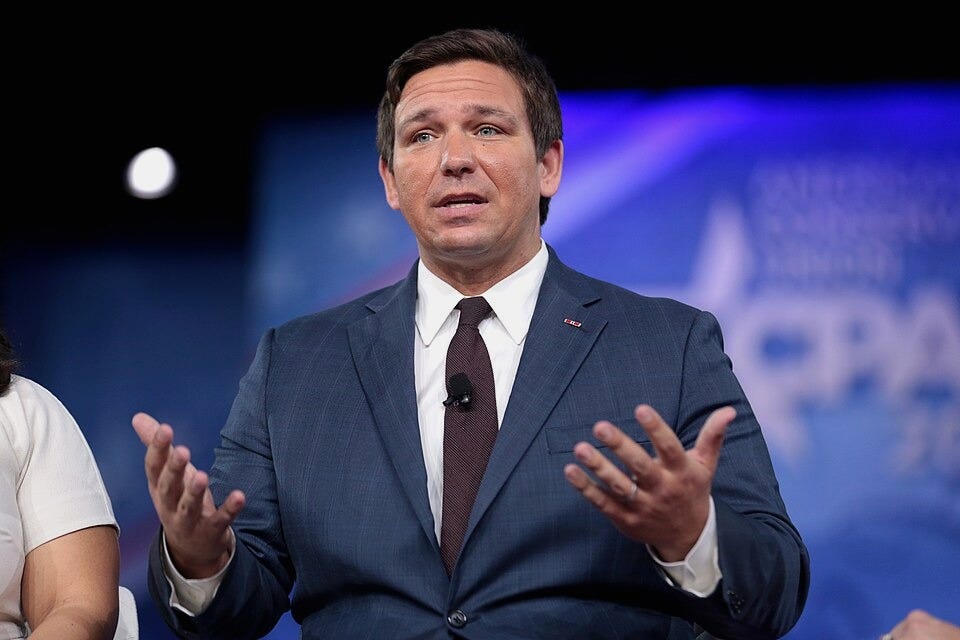

Gov. Ron DeSantis proposed an ‘Artificial Intelligence Bill of Rights’ for citizens.
The government is taking an activist role in tech, including…
…investing $150 million into semiconductor startup xLight.
…going “all in” on robotics, with Howard Lutnick considering issuing an executive order next year.
…advocating for AI to replace humans in power plants.
…AMP2: “the world’s largest autonomous-capable science system for anaerobic microbial experimentation.”
Sens. Maggie Hassan (D-NH) and Jim Banks (R-IN) have introduced a bill to create a $10 million challenge to drive AI innovation.
TECH
Dario Amodei took the stage at the NYT DealBook Summit, and took shots at Sam Altman, OpenAI, and Google.
Anthropic also released a Claude-powered tool for conducting interviews.
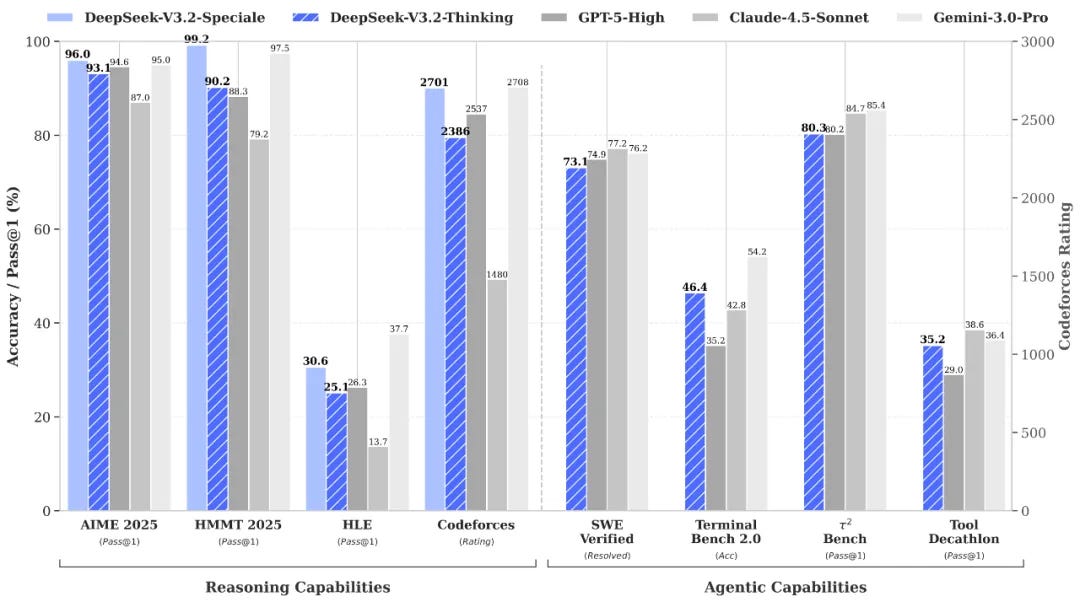
Chinese AI developer DeepSeek released two reasoning models (V3.2 and V3.2-Speciale) that perform on par with SOTA models like GPT-5 and Gemini 3 Pro.
Posing harmful requests as poetry can trick AI models into producing harmful content.
In the markets:
NYT filed another lawsuit against Perplexity.
OpenAI are turning off shopping suggestions: “we fell short”
Anthropic’s Amanda Askell answered questions about AI, philosophy, and the (potential) consciousness of AI models:
TOP READS
✍️ Can the United States’ Bet on AI Revitalize U.S. Science? (CSIS)
🎧 How to Save Science Funding (Statecraft)
✍️ What if AI ends loneliness? (AI Policy Perspectives)
✍️ 10 takeaways from a discussion with Dean Ball (AI Policy Perspectives)
✍️ Demis Hassabis’ Quest to Discover Artificial General Intelligence (Bismarck Analysis)
✍️ The end of the 2026 Semiconductor Cycle (Semiconductor Business Intelligence)
🎥 Taiwan’s Vision for Space (Special Competitive Studies Project)
✍️ AI and insurance (Nicklas Lundblad)
✍️ Can AI embrace whistleblowing? (Transformer News)
✍️ Given export controls, how far can Chinese HBM go? (ChinaTalk)
📊 AWS Trainium3 Deep Dive | A Potential Challenger Approaching (SemiAnalysis)
✍️ Nvidia, AMD, Amkor, Arista @ UBS Tech Conference (ChipStrat)
🎧 NASA and beyond: My chat with space policy analyst Casey Dreier (James Pethokoukis)
✍️ The Race for Fusion: Will America Secure the Critical Components? (Special Competitive Studies Project)