


Delivered to your inbox every Monday, Last Week in AI Policy is a rundown of the previous week’s happenings in AI governance in America. News, articles, opinion pieces, and more, to bring you up to speed for the week ahead.
Policy
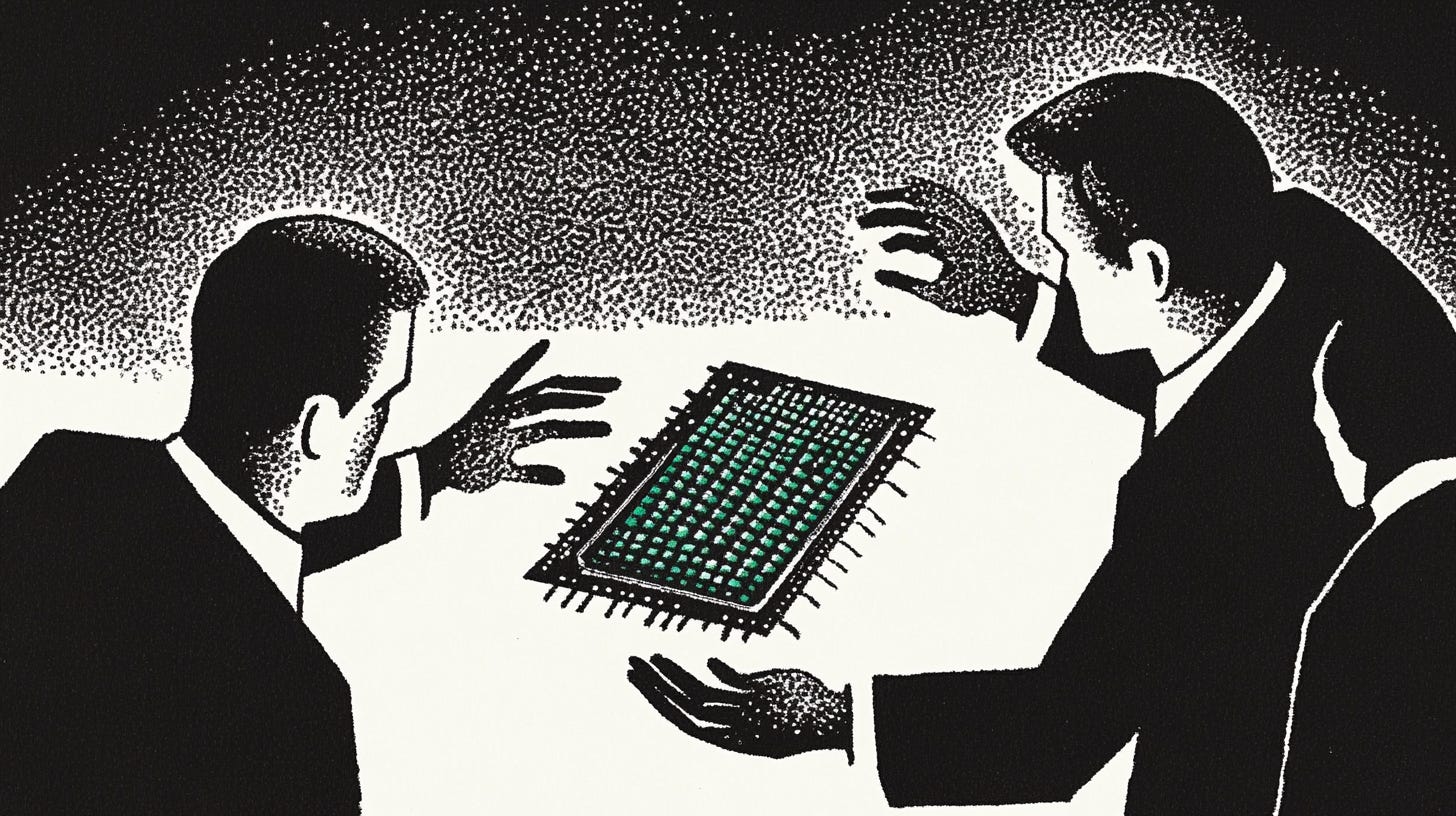
U.S. is exploring location tracking for chips, says Michael Kratsios
Science and Technology Policy Advisor and architect of the US AI Action Plan Michael Kratsios described the potential implementation of “software or physical changes you could make to the chips themselves to do better location-tracking.”
Physical mechanisms for location tracking and other security measures are often described as hardware-enabled mechanisms and a form of on-chip governance.
They could allow for better execution of export controls on chips, which in recent months have struggled as a result of extensive black markets and backdoors into restricted geographies.
NVIDIA chip shipments delayed by export approvals
Under Commerce Secretary Howard Lutnick, the Department is facing a backlog of thousands of export license applications.
Among the hardest hit companies is NVIDIA, who are currently trying to meet enormous demand from China.
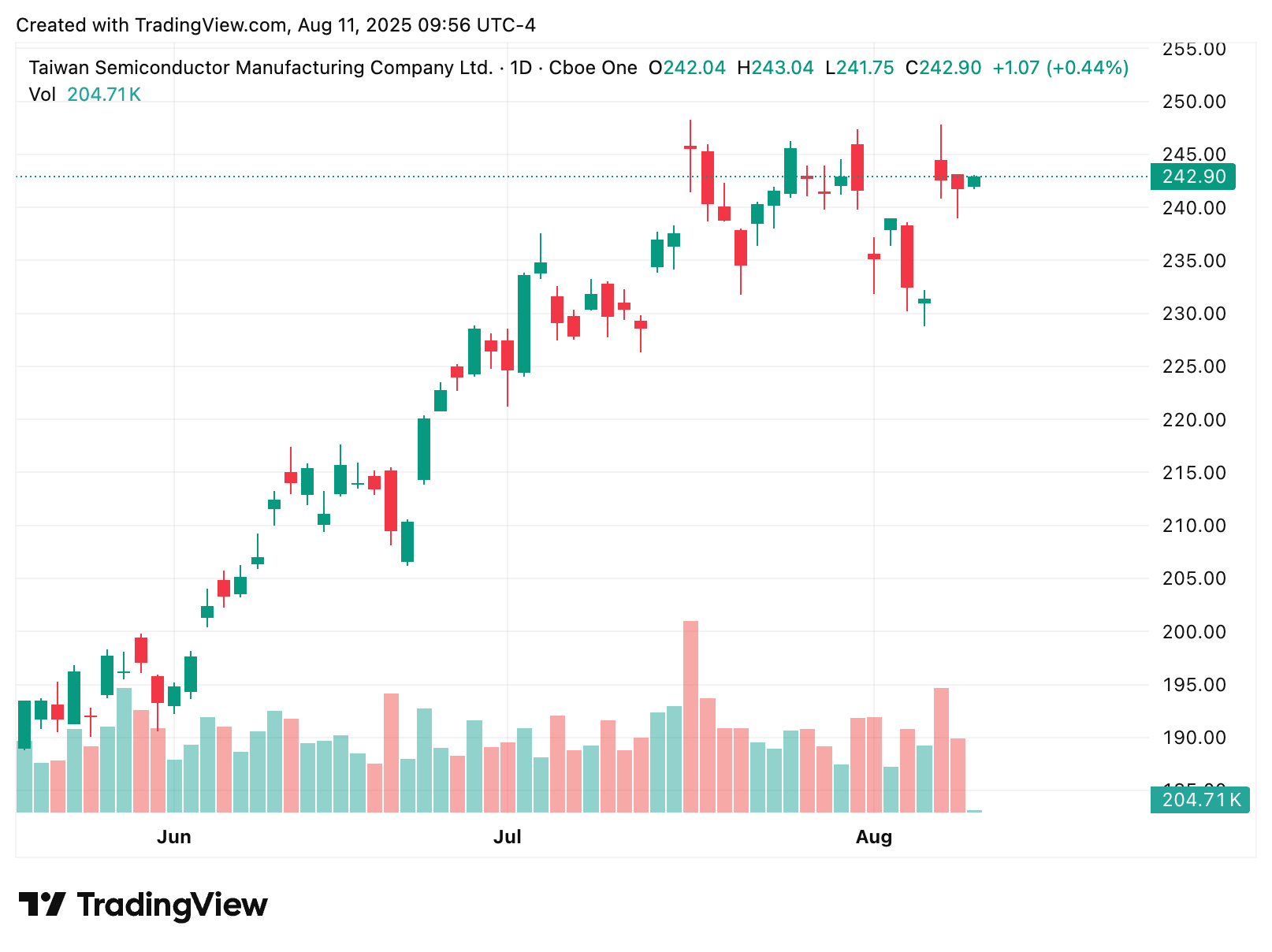
TSMC’s stock soars as it benefits from tariff exemption
Taiwan Semiconductor Manufacturing Company (TSMC), the world’s largest chip manufacturer, will not have to pay Trump’s 100% tariff on chips.
“TSMC is exempted from the chip tariffs because it has set up plants in the US,” said Taiwanese minister Liu Chin-ching.
TSMC’s shares rose to record high on Thursday.
Two Chinese nationals arrested for alleged illegal exports of chips
They were charged with violating the Export Control Reform Act by exporting tens of millions of dollars worth of chips to China.
Through a California-based company, ALX Solutions Inc., the pair allegedly made at least 20 shipments from the U.S. to China, via freight-forwarding companies in Malaysia and Singapore.
They face felony charges, carrying a maximum sentence of up to 20 years in federal prison.
NSF invests $100M to expand AI Research Institutes
Following the release of the AI Action Plan, the National Science Foundation announced a $100 million public-private investment to expand its National AI Research Institutes.
The funding will support five institutes and a central hub focused on generative AI, STEM education, drug discovery, and advanced materials. New projects include research into safer AI assistants, clinical imaging tools, and molecule design.
GAO details federal use of generative AI
A new GAO report finds federal agencies are rapidly adopting generative AI, with reported use cases rising from 32 in 2023 to 282 in 2024.
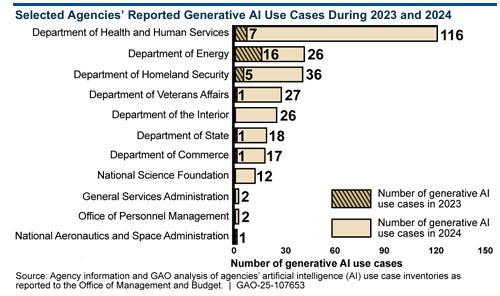
Twelve agencies were reviewed; eleven reported generative AI activity in 2024, with NASA as the sole exception. Nearly one-third of use cases remain in early development stages.
SEC launches AI Task Force to drive innovation and efficiency
The Securities and Exchange Commission has launched an agency-wide task force to advance the responsible use of AI. Valerie Szczepanik, newly appointed as the SEC’s Chief AI Officer, will lead the effort.
The task force will centralize AI initiatives across SEC divisions and offices, support cross-agency collaboration, and guide the adoption of AI tools. It will also focus on aligning innovation with governance and accelerating mission-aligned AI deployments.
GSA eyes expansion of internal AI tool to other agencies
The General Services Administration is exploring a government-wide rollout of its internal generative AI platform, GSAi.
Chief AI Officer Zach Whitman described the effort as the “next iteration” of GSAi, allowing other agencies to adopt it in isolated, tenant-based environments tailored to their needs.
GSAi, launched internally in March, draws on models from OpenAI, Anthropic, and Google, and is used by nearly half of GSA staff daily.
Whitman stressed a “vendor-agnostic” approach and said GSA’s AI Safety Team is evaluating tools like xAI’s Grok 3 and 4. He said expanding GSAi could cut costs and reduce duplicated agency contracts: “Everyone’s building the exact same thing.”
Presidential AI Challenge aims to build youth skills through community-based projects
As part of the Trump administration’s efforts to bolster AI education, the White House has launched the Presidential AI Challenge to encourage students and educators to apply AI tools to local and regional problems.
The initiative seeks to expand K–12 engagement with AI by fostering early exposure to responsible use and real-world application.
The program aims to build national capacity in AI literacy and prepare the next generation for participation in an AI-assisted workforce.
Press Clips
What Happens When AI Schemes Against Us (Garrison Lovely, Obsolete) ✍
AI Education: Understanding the Hype (Lily Ottinger and Irene Zhang, ChinaTalk) ✍
How not to lose your job to AI (Benjamin Todd, 80,000 Hours Podcast) 🔉
Episode 83: Horacio Rozanski on Delivering Tech Solutions Rapidly to the Warfighters (Special Competitive Studies Project) 🔉
Human-level AI is not inevitable. We have the power to change course (Garrison Lovely, The Guardian) ✍
Episode 12 - Cyber Statecraft (Special Competitive Studies Project) 🔉
Robotics Levels of Autonomy (SemiAnalysis) ✍
GPT-5 and the arc of progress (Nathan Lambert, Interconnects) ✍
AI disagreements (Brian Merchant, Blood in the Machine) ✍
A discussion with Tyler Cowen (AI Policy Perspectives) 🔉
Keeping AI agents under control doesn't seem very hard (Timothy B. Lee, Understanding AI) ✍
AI Is Not A Product (Anton Leicht, Threading the Needle) ✍
Quantifying the algorithmic improvement from reasoning models (Anson Ho and Arden Berg, Epoch AI) ✍
Human judgment and artificial intelligence (Nicklas Berild Lundblad, Unpredictable Patterns) ✍
Opportunities to Strengthen U.S. Biosecurity from AI-Enabled Bioterrorism: What Policymakers Should Know (Georgia Adamson and Gregory Allen, CSIS)